



















Opening of Japan’s First Regular Service Route for Fully Electric Passenger Vessels Operated by a Private Company
Launch of &CRUISE, a Waterway Transport Project by Mitsui Fudosan
Service to Begin in April 2026 Between Nihonbashi and Toyosu
January 28, 2026
Mitsui Fudosan Co., Ltd.
Key Points of this Press Release
- Mitsui Fudosan will construct and own two fully electric passenger vessels and launch the waterway transport project, &CRUISE
- This will be Japan’s first regular service route for fully electric passenger vessels operated by a private company. Service is scheduled to begin between Nihonbashi and Toyosu in April 2026 (Mitsui Fudosan: vessel owner; operating company: Kanko Kisen Kogyo Co., Ltd. (planned))
- As a new form of water mobility featuring a design that enhances the scenery of Nihonbashi River Walk, a range of functions, and environmental performance, the vessels will provide a well-being-oriented mobility experience that allows passengers to feel the sky, water, and wind.
- By establishing a regular service route with Nihonbashi as its starting point, Mitsui Fudosan aims to enable waterway transport to serve as crucial infrastructure in both normal times and emergencies.
Tokyo, Japan, January 28, 2026 - Mitsui Fudosan Co., Ltd., a leading global real estate company headquartered in Tokyo, announced today that it will launch &CRUISE, a waterway transport project. The service is scheduled to begin operating between Nihonbashi and Toyosu in April 2026, as a regular service route using fully electric passenger vessels.
As the vessel owner, Mitsui Fudosan has been constructing two fully electric passenger vessels (hereafter, “the Vessels” or “the Vessel”) powered by lithium-ion secondary batteries at a shipyard in Ise City, Mie Prefecture. Through this effort, Mitsui Fudosan seeks to build a waterway transport network with Nihonbashi as its starting point.
The Vessels have been named “Nihonbashi e-LINER,” and Kanko Kisen Kogyo Co., Ltd. is scheduled to carry out vessel operations. A Tokyo Metropolitan Government subsidy for waterway transport revitalization project expenses is expected to be applied to the Vessels.
The Vessels feature a design that enhances the scenery of Nihonbashi River Walk, a neighborhood creation initiative in the areas along the Nihonbashi River, along with advanced functionality. They also offer high environmental performance, operating as virtually zero-emission vessels (zero CO2 emissions) through power supply facilities newly installed at Urban Dock LaLaport TOYOSU (hereafter, “LaLaport TOYOSU”). The Vessels will provide a well-being-oriented mobility experience that allows passengers to feel the sky, water, and wind, with the aim of enabling waterway transport to serve as crucial infrastructure in both normal times and emergencies.
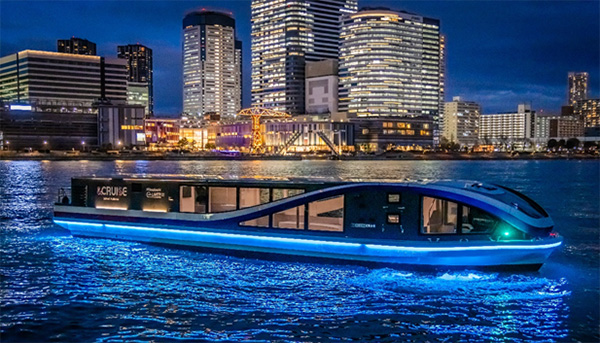
Nighttime On-the-Water Experience – Nihonbashi e-LINER illuminated in harmony with the waterfront nightscape
About the Waterway Transport Project &CRUISE
■ Vision for &CRUISE
By becoming a vessel owner itself and linking the Nihonbashi River Walk in the areas along the Nihonbashi River and various waterfront hubs, Mitsui Fudosan aims to make waterway transport a familiar part of everyday life. In addition, from the 2030s onward, following the opening of the redeveloped district on the former Tsukiji Market site, Mitsui Fudosan aims to further expand the waterway transport network, using three major market areas past and present, namely Nihonbashi, Toyosu, and Tsukiji, as key hubs.
■ Value to Be Provided
For everyday uses such as shopping and commuting, as well as serving as a mode of transportation for domestic and international visitors traveling to waterfront-area sightseeing attractions, the service will provide a well-being-oriented mobility experience that allows passengers to feel the sky, water, and wind. In times of emergency, the service is also expected to be used for transporting people and supplies by securing maritime access routes, and to provide reverse power supply from the Vessels to smartphones and other devices.
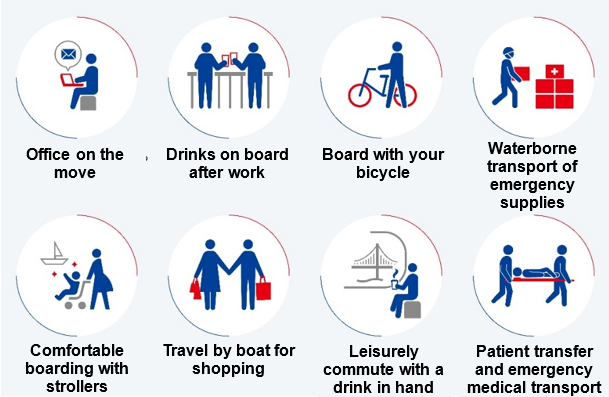
Illustrations of onboard experiences, leisure, and emergency responses
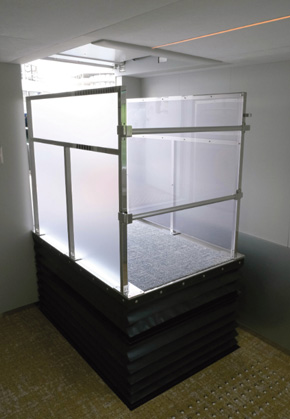
Smooth wheelchair travel using an on-board elevator
About the Nihonbashi e-LINER Fleet of Fully Electric Passenger Vessels
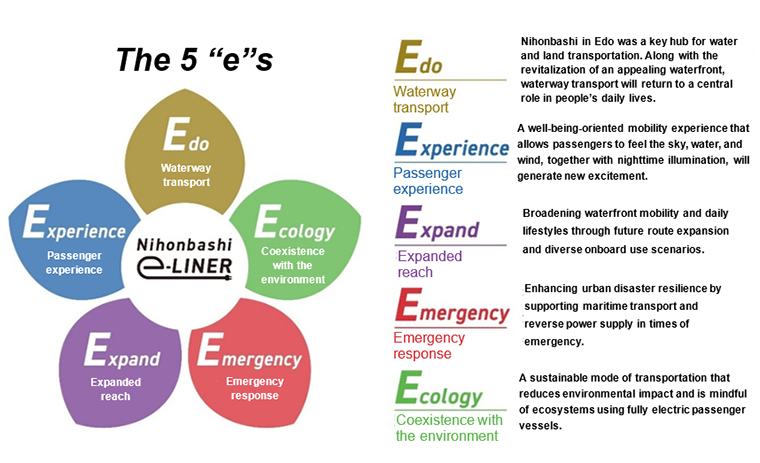
■ The 5 “e”s
In addition to quiet operation, low vibration, and zero fuel odor, the “e” in Nihonbashi e-LINER represents five words that begin with the letter “e.”
■ Coexistence with the Environment
Fully electric passenger vessels
The Vessels are equipped with lithium-ion batteries with a capacity of approximately 300 kWh, among the largest in Japan for vessels under 20 gross tonnage (GT) inspected by the Japan Craft Inspection Organization (JCI), providing the electric power required for operation on regular service routes. With all internal combustion engines, including the main engines and generators, eliminated from the Vessels, they produce no CO2 emissions during operation.
[Technical supervision of electric propulsion system]
Tsuyoshi Oode, Specially Appointed Professor, Tokyo University of Marine Science and Technology
< Profile >
Graduated from Tokyo University of Mercantile Marine. Ph.D. in Engineering.
Since April 2010, he has been engaged in research and development in areas such as fast-charging battery-powered vessels, fuel cell ships, and unmanned surface vessels.
< Remarks >
The Vessels are positioned as environmentally and people-friendly ships capable of operating solely on electric energy. Unlike automobiles, ships are immediately affected by wind, waves, and tides if propulsion is lost (i.e., a propulsion stall occurs). By adopting a distributed system configuration, the Vessels reduce the risk of losing propulsion. As vessels at the forefront of the rapidly growing eco-ship sector, they are expected to lead the way.
Environmentally friendly interior materials
Many environmentally friendly materials have also been adopted for the interior materials of the Vessels.
| Cabin seat textiles | A high-durability textile material that is environmentally and people-friendly, made using recycled polyester and other materials, and free from hazardous chemicals, such as PFAS (PFAS: per- and polyfluoroalkyl substances). |
|---|---|
| Ceiling surfaces, upper window frames, and trim sections | Ultrasuede® HP (Toray Industries, Inc.), a high-quality synthetic suede material that uses industrial waste such as polyester film offcuts from factories as part of its raw materials and reduces petroleum resource consumption, has been adopted. (* For Nihonbashi e-LINER 01) |
| Passenger cabin and helm station flooring | Carpet made from 100% recycled materials, reusing discarded fishing nets, used PET bottles and other waste that can contribute to marine pollution. |
| Passenger cabin walls | Eco-friendly building materials that are almost 100% recyclable. |
| Restroom ceiling | Eco Mark-certified sound-absorbing ceiling material that effectively utilizes over 50% industrial by-products that are typically discarded (slag). |
| Restroom flooring | Recycled vinyl flooring with low environmental impact, reusing manufacturing offcuts and other scrap as raw materials. |
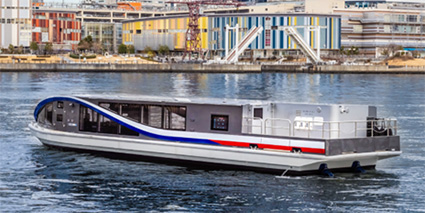
Port side of the Vessel
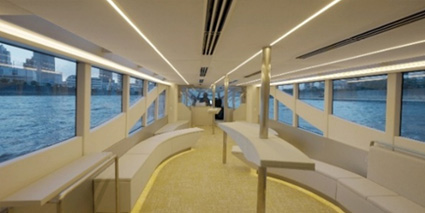
Looking toward the bow from the aft interior of the Vessel
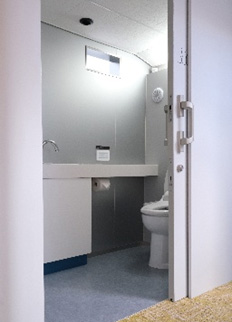
Wheelchair-accessible onboard restroom
Toward the Start of Service
■ Envisioned Routes
Service to begin in April 2026 with 2 vessels operating between Nihonbashi and Toyosu
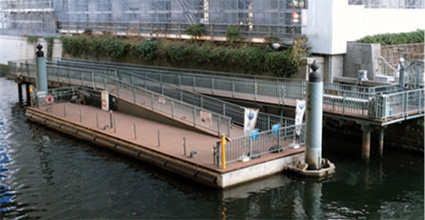
Nihonbashi Pier (Chuo City Disaster Pier)
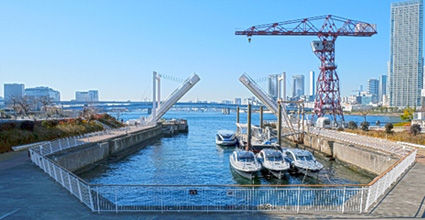
Toyosu Pier (LaLaport TOYOSU)
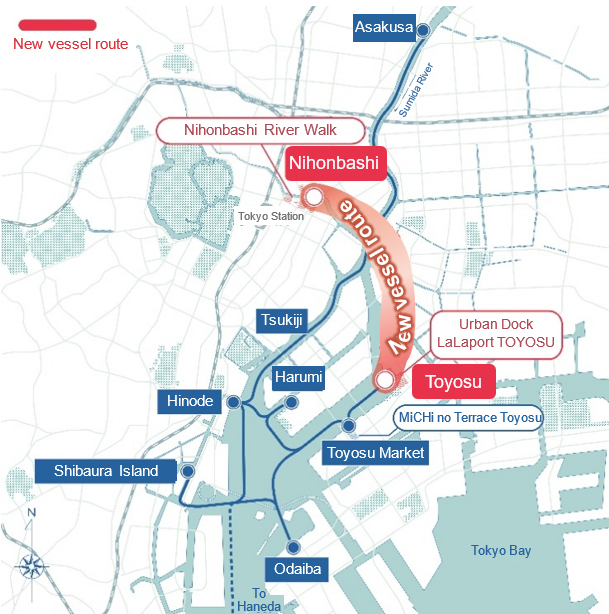
Envisioned routes
(Reference) Overview of Power Supply Facilities
Electric power for the Vessels (sourced from renewable energy) is transmitted from a high-voltage power receiving facility at LaLaport TOYOSU, transformed to a lower voltage, and supplied to four fast charger units.
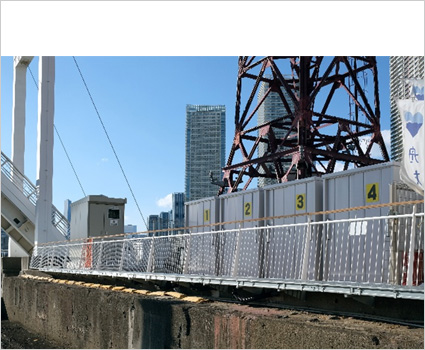
Power supply facilities adjacent to the Toyosu Pier
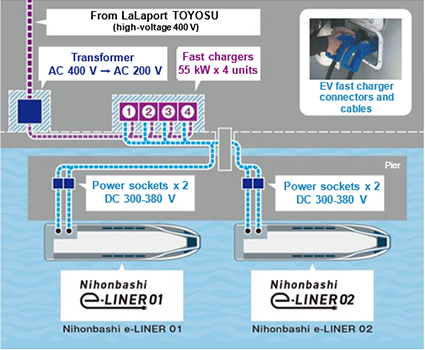
Conceptual diagram
(Reference) Vessel Construction Framework
| Design and construction | Taiyo Electric Co., Ltd. (Head Office: Chiyoda-ku, Tokyo; President and Representative Director: Takuo Yamada) |
|---|---|
| Shipyard | ELMO Co., Ltd. (Head Office: Ise City, Mie Prefecture; President and Representative Director: Takeshi Sakaguchi) |
| Design | ALTEMY Co., Ltd. (Head Office: Chuo-ku, Tokyo; President and Representative Director: Eri Tsugawa) |
| Signage | Rian Ihara Design Office Limited (Head Office: Toshima-ku, Tokyo; President and Representative Director: Rian Ihara) |
| Advisor | Kanko Kisen Kogyo Co., Ltd. (Head Office: Chuo-ku, Tokyo; President and Representative Director: Natsuko Muraoka) |
(Reference) Vessel Specifications
| (1) Vessel dimensions | Overall length (excluding fenders) | 17m |
|---|---|---|
| Beam (excluding fenders) | 4m | |
| Gross tonnage | Approx. 17 GT | |
| (2) Maximum passenger capacity | 62 persons (including 2 crew) | |
| (3) Propulsion system | Type, continuous maximum output, number of units | Permanent magnet water-cooled electric motors, 90 kW x 2 units |
| (4) Lithium-ion propulsion batteries | Type | Lithium titanate secondary batteries |
| Quantity / rated capacity | 240 cells, 298.08 kWh | |
| (5) Maximum output during sea trials | 8 knots or more | |
| (6) Endurance | 8 hours or more (speed 6 knots, air conditioning off, battery ambient temperature 25℃) | |
| (7) Other specifications | Digital amenities: Free Wi-Fi, charging outlets, barrier-free access, bicycle loading available (2 bicycles on deck) Low air-draft vessel * Fully operable 24/7 year-round (except during abnormal tide conditions) |
|
(Reference) Nihonbashi River Walk
Nihonbashi River Walk is the name of the area encompassing redevelopment districts along the Nihonbashi River and their surroundings, centered on a space with a close affinity to water and a riverfront pedestrian network. In this area, the Metropolitan Expressway Nihonbashi Section Underground Relocation Project and the five current redevelopment projects are cooperating with one another to advance the creation of a neighborhood open to the sky and river. This initiative is being carried out in unison with the Japanese government, Tokyo Metropolitan Government, Chuo Ward, Metropolitan Expressway, private-sector businesses including redevelopers, and the community. The combined area of the 5 development zones is approximately 11 hectares. By creating an expansive space with a close affinity to water, the aim is to transform the Nihonbashi-Yaesu area into a new face of Tokyo as a waterfront city.
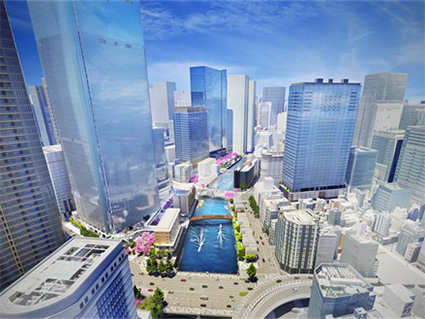
Bridge after removal of the Metropolitan Expressway viaduct*
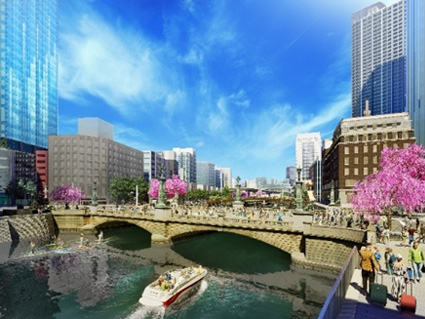
A neighborhood open to the sky and river unfolds.*
* These computer-generated images and renderings are conceptual and do not represent the actual details of the plan.
Sustainability in the Mitsui Fudosan Group
Based on the meaning of its “& mark,” “to generate new value with society through cooperation, coexistence and co-creation, we forge ahead, innovating,” the Mitsui Fudosan Group views the “creation of social value” and the “creation of economic value” as two wheels of a cart. Accordingly, we believe that the creation of social value leads to the creation of economic value, and that this economic value then creates even greater social value.
Moreover, we identified six Group Materiality priority issues when formulating our new management philosophy in April 2024. These Group Materiality priority issues are (1) Contribute to industrial competitiveness, (2) Coexist with the environment, (3) Health and Vitality, (4) Safety and security, (5) Diversity and inclusion, and (6) Compliance and governance. The Mitsui Fudosan Group will work to address each of the materialities through its core business activities and contribute to the promotion of sustainability.
(References)
・ Group Management Philosophy and Long-Term Vision
https://www.mitsuifudosan.co.jp/english/corporate/innovation2030/
・ Group Materiality
https://www.mitsuifudosan.co.jp/english/esg_csr/approach/materiality/
・& EARTH for Nature
https://www.mitsuifudosan.co.jp/english/business/development/earth/for-nature/
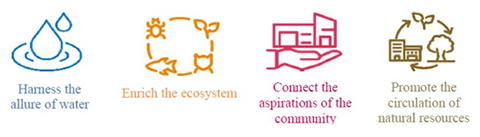
Furthermore, in April 2025, the Mitsui Fudosan Group formulated “& EARTH for Nature,” its declaration of coexistence with the environment in neighborhood creation. Seeing the environment as a “Holistic Environment” blending nature, people, and community into a cohesive whole, the Group is promoting neighborhood creation that expands prosperous “Holistic Environments” and passes them on to future generations. In the Declaration, five key issues to address have been established: Preserve and nurture greenery, Harness the allure of water, Enrich the ecosystem, Connect the aspirations of the community, and Promote the circulation of natural resources. The initiatives described in this news release contribute to four of the key issues to address in “& EARTH for Nature.”