Viewing this era of significant change as
an opportunity to create new value,
I will vigorously drive efforts to enhance
our corporate value by fully leveraging
our competitive advantages.
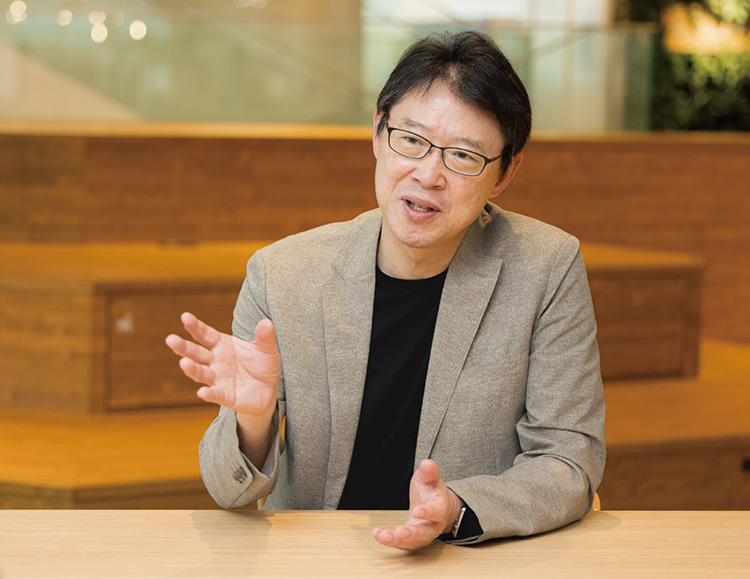
President and Chief Executive Officer
Mitsui Fudosan Co., Ltd.


Looking back on results for the previous fiscal year, what are your thoughts on the Company’s current share price?
This is our second set of financial reports since publicly announcing details of “& INNOVATION 2030,” the Group’s long-term vision created in concert with all stakeholders. On a personal note, I truly believe that our fiscal 2025 results are a testament to the Group’s competitive advantage and sound growth strategy. Not only did we set record highs for revenue from operations, operating income, business income, ordinary income, and profit attributable to owners of parent, but we also achieved the key metrics—business income, net income, and ROE—set under the Group long-term vision “& INNOVATION 2030” one year ahead of schedule(P.39)
This is not simply an indication of strong performance. I am convinced that this clearly demonstrates our ability to capitalize on the high-quality opportunities we have honed over many years as well as our development capabilities and capacity to convert added value into earnings. In short, our efforts are steadily bearing fruit and our results in fiscal 2025 are a measure of our sustainable growth potential. For fiscal 2026, we forecast profit attributable to owners of parent of ¥285 billion, ¥15 billion above the fiscal 2026 target set under “& INNOVATION 2030.”
Mitsui Fudosan has consistently adhered to the pursuit of value that can only be created in physical places across each of its office building, retail facility, hotel, logistics facility, housing, and overseas business domains. Given that our very mission is to provide places where people can gather, work, learn, enjoy themselves, and innovate, we are encouraged that our efforts to create value are emerging as revenue.
As far as the Company’s share price is concerned, I do not believe that our capabilities and growth potential are being fully recognized. Looking back over the past year, and against the backdrop of a robust performance and expectations of an inflationary environment, our share price hit a record high in February 2026. Over the ensuing period, however, the real estate sector as a whole has trended poorly due to such factors as geopolitical risks, including conditions in the Middle East, and concerns over long-term interest rates. Mitsui Fudosan is no exception. Quite naturally, the market has its own way of making judgements. Having said this, as CEO, I sense that the Company’s current share price does not accurately reflect its true intrinsic value. This is because of our extremely robust competitive edge that will help propel profit growth well into the future.
Mitsui Fudosan’s strengths can be summarized into three core capabilities: “the ability to win business opportunities,” “the ability to create high value neighborhoods, facilities, and services,” and “the ability to monetize the added value we create.”
Turning first to our overwhelming ability to win business opportunities, backed by long-standing relationships of trust and extensive networks in Japan and overseas, together with a top-tier track record, Mitsui Fudosan attracts numerous business opportunities that are not available to our competitors.
Looking next to our ability to create high value neighborhoods, facilities, and services, our strengths lie not only in developing buildings but also in creating places where people gather and where new connections and innovations are born.
Moving on to our ability to monetize the added value we create, no matter how outstanding a facility may be, it is meaningless unless customers recognize its value. It is equally important that we translate this value into rents, usage fees, and ultimately sales prices that help generate revenue. Mitsui Fudosan takes great pride in its ability to do exactly that, a source of its industry-leading competitive edge.
It is precisely these threefold strengths that serve as the wellspring of our profit growth. I am confident that these strengths will allow us to withstand the upward cost pressures stemming from rising construction costs and interest rates, a constant concern of investors, and to secure high-quality returns while achieving continuous profit growth.
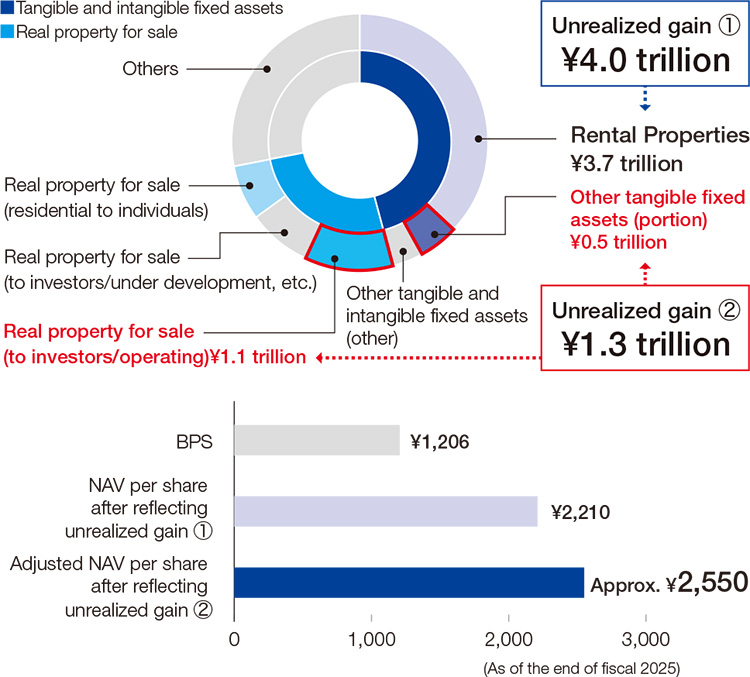
Meanwhile, from an asset value perspective, I strongly believe there is ample room for the Company’s valuation to rise. Taking into account
unrealized gains of real estate for rent and property sales to investors, Mitsui Fudosan’s NAV per share is estimated to come in at around
¥2,550. This translates to a market capitalization of approximately ¥7 trillion. Moreover, there are a number of future value components, including assets under development, property sales to individuals, and the Management business that are not fully reflected in current figures. In light of the aforementioned, I reiterate there is ample room for our corporate value to be recognized.
Unrealized Gain of Owned Assets and NAV per Share
- NAV/share: ¥2,210
- Adjusted NAV/share* after reflecting unrealized gains on real property for sale: Approx. ¥2,550
* In addition to unrealized gain ①, reflects a portion of “Other Tangible and Intangible Fixed
Assets” and “Real Property for Sale (to investors)” (unrealized gain ②)
From this perspective, for the first time we decided at the start of the fiscal year to repurchase ¥40 billion of our own shares, and the repurchase was completed over the period from May 15 to May 27. Moreover, and as previously announced, we are considering an additional repurchase during the current fiscal year. I am fully aware that the repurchase of own shares is an efficient means of investment depending on the share price. Moving forward, we will continue to promote capital policies that include the flexible repurchase of own shares while taking into consideration capital efficiency and the share price.
I would like, at this point, to make it abundantly clear that my principal focus is not on short-term measures that impact our share price. My focus is on securing sustainable profit growth and providing continuous returns to shareholders. In this regard, I am committed to promoting management with an equal focus on the three key objectives: Enhance Growth, Efficiency, and Shareholder Returns.
With this in mind, I will steadily advance three business strategy paths in a bid to secure profit growth.
At the same time, I will enhance capital efficiency through various measures, including the sale of investment securities and repurchase of own shares.
I will then look to return the results to shareholders.
By ensuring that the momentum of this virtuous cycle remains unbroken, I am confident that we will achieve an EPS growth rate of over 8% per year (CAGR) and an ROE of 10% or higher, targets set for around 2030, as a matter of course.
Mitsui Fudosan maintains an abundant pipeline across a wide range of areas, including Nihonbashi, Jingu Gaien, and Tsukiji, that will contribute to earnings from fiscal 2031. Rather than rest on our laurels, we are drawing on our robust ability to win business opportunities to expand our pipeline even further. In addition, we maintain a balanced portfolio that is resilient to changes in the external environment, and the combination of these strengths creates diverse opportunities to generate profits. As CEO, I will do everything in my power to enhance corporate value while conveying the Company’s strengths to the market in greater detail and with more conviction than ever before.
One reason cited for why the Company’s share price is undervalued is that, while the domestic business is extremely robust, the Group’s overseas business has continued to post losses for the past several years.
What is your outlook for the Group’s overseas business going forward?
Investors frequently voice their concerns about the Group’s overseas business. Having said this, I believe we are at a critical turning point from a future growth perspective.
It goes without saying that the COVID-19 pandemic had a once-in-a-century impact on society. The global real estate market was far from immune. In the U.S. in particular, previously unanticipated structural changes, including the widespread adoption of working from home, steadily took root. Driven by the sharp rise in interest rates, the Cap Rate also increased significantly, and conditions surrounding the real estate market changed dramatically. In light of this volatile environment, Mitsui Fudosan took steps to implement the necessary measures with an eye toward managing future risks.
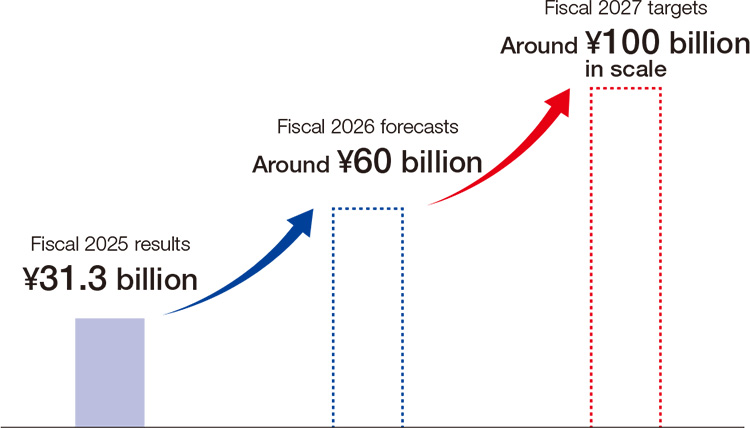
As a result, for fiscal 2026 we no longer expect the need to recognize the kinds of losses on overseas properties that we have recorded in recent years. We are therefore planning overseas business income of approximately ¥60 billion in fiscal 2026, a substantial increase from fiscal 2025.
This profit growth is underpinned by the portfolio of high-quality assets we have built over a number of years in some of the world’s leading cities.
With unrealized gains totaling ¥900 billion, our three flagship office buildings in Manhattan, New York, including 50 Hudson Yards and 55 Hudson Yards, remain highly competitive and continue to generate stable leasing revenue. In addition, by accelerating the turnover of assets we have developed to date, we will bring property sales back into profit and achieve our fiscal 2026 guidance.
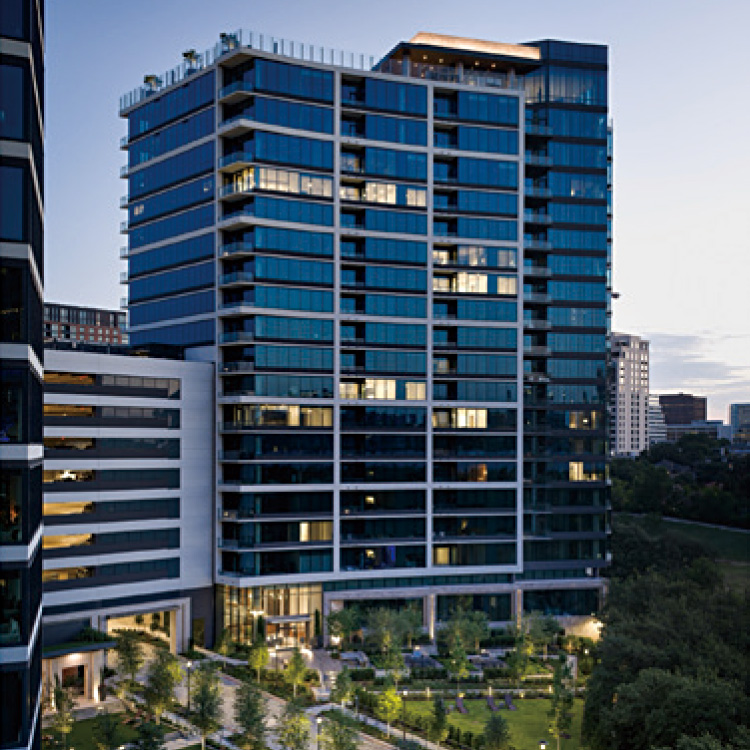
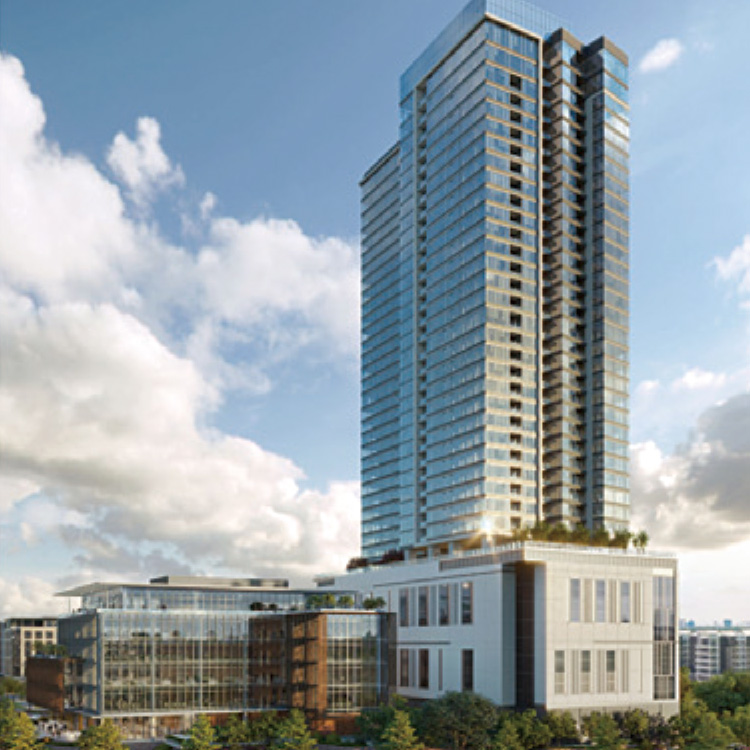
Over the next few years, we will welcome the completion and launch of a continuous stream of large-scale projects that we expect will contribute to profits. For example, construction of the large-scale office building RMZ Ecoworld 30 in Bangalore, India, and the lab and office building Innovation Square Phase III in Boston, U.S., will come to an end in fiscal 2026. This will be followed in fiscal 2027 by the successive completion and launch of such projects as 55 Pitt Street in Sydney, Australia; South Molton Triangle in London, U.K.; and LaLaport KAOHSIUNG in Kaohsiung, Taiwan. In fiscal 2027, we anticipate leasing activities for rental housing in the U.S. Sun Belt Area will come to an end with certain properties also ready for sale. In Asia, we are witnessing a steady increase in condominium contracts. While based on the assumptions that uncertainty surrounding conditions in the Middle East will dissipate and that the financial and real estate market environments will stabilize, we expect business income to total ¥100 billion in fiscal 2027 buoyed by the twin engines of leasing income growth and accelerated turnover on the back of the previously mentioned high-quality pipeline.
On top of this, we are looking to invest further in high-quality assets, exemplified, for example, by our decision to invest in data centers in India.
By adopting a global perspective and making smart decisions about investments and divestitures, we will work to post profits commensurate with the scale of our assets in our overseas business.
Forecasts for Future Overseas Business Income
Major Overseas Properties Scheduled for Completion in Fiscal 2026
[Bangalore, India]
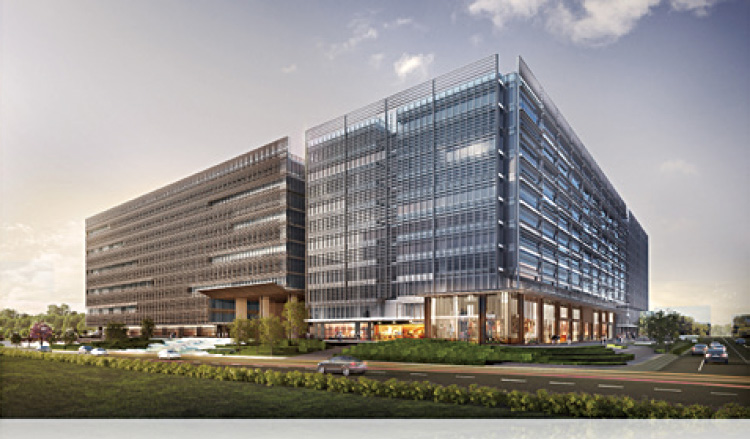
RMZ Ecoworld 30
[Boston, U.S.]
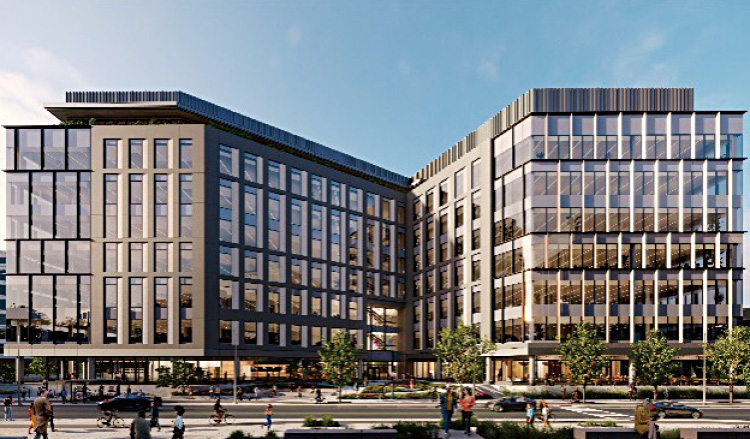
Innovation Square PhaseⅢ
Major Overseas Projects Scheduled for Completion and Launch in Fiscal 2027
[Sydney, Australia]
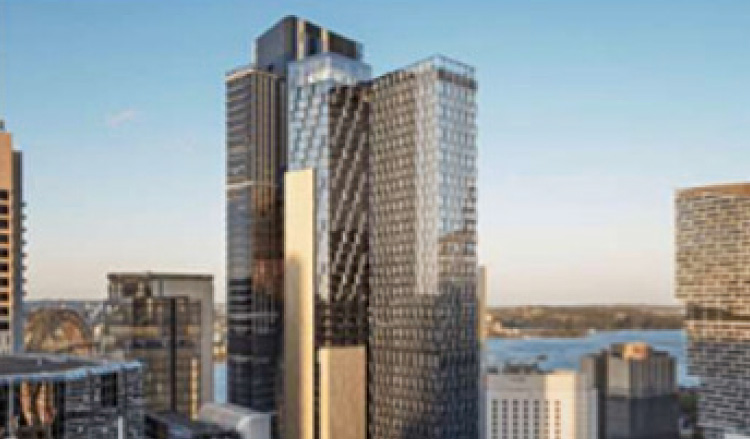
55 Pitt Street
[London, U.K.]
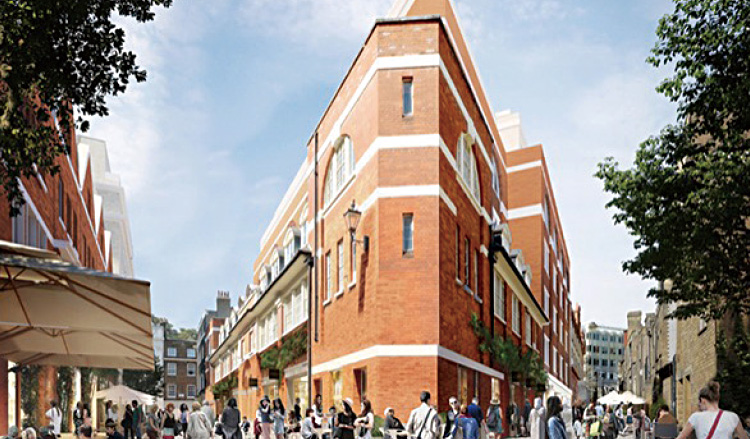
South Molton Triangle
[Kaohsiung, Taiwan]
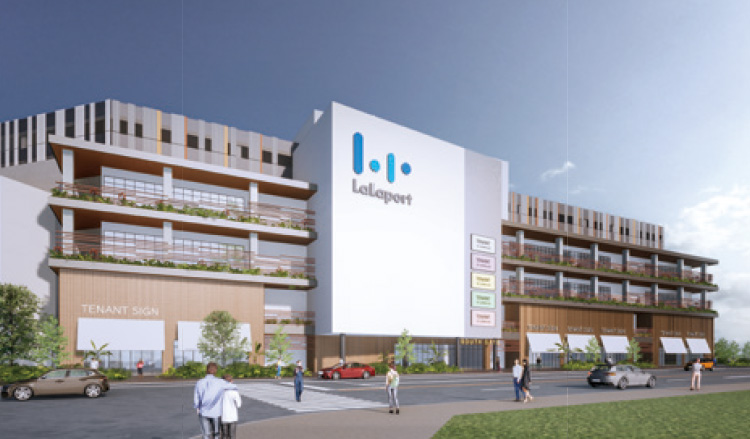
LaLaport KAOHSIUNG
Rental Housing in the U.S. Sun Belt Area
[Sun Belt, U.S.]
You spoke of plans to increase profits in the Group’s overseas business. What other growth drivers do you see as key to achieving the numerical targets for around 2030, including the EPS growth rate and ROE?
When looking at the Group’s growth strategy as it heads toward fiscal 2030, I believe the most important point of focus is the certainty of growth. Setting targets is a simple task. More importantly, I suspect that investors want to know “Why can we achieve the identified targets” and “What is the path toward profit growth?”
I have absolute confidence in our ability to secure an EPS growth rate of over 8% per year (CAGR) and an ROE of 10% or higher, targets identified under “& INNOVATION 2030.” This is because of the many engines we possess that underpin the Group’s expansion. In broad terms, the Mitsui Fudosan Group maintains three growth drivers.
The first is the ability to improve existing asset profitability. Second is the ability to expand revenues generated by new asset classes.
And third is the ability to expand asset-light revenues, centered on fee businesses.
By leveraging the synergies generated among these three growth drivers, we will secure sustainable profit growth.
The first growth driver:
The ability to improve existing asset profitability
In the current inflationary environment, we view “decoupling from the market” as a growth opportunity. For many years, Japan experienced a period of prolonged weak rent and service price growth. However, today’s market is showing signs of a shift toward one in which differentiation based on location, quality, and service is being accurately valued. I strongly believe this shift is a significant tailwind that will help propel the Group forward.
First, in our office buildings business, efforts to create offices that people want to work in, located in cities people want to visit, are beginning to blossom.
For example, in Nihonbashi, we are developing mixed-use properties that integrate a host of retail, office, hotel, housing, and other functions. Working with local governments, the private sector, and communities, we have revitalized Fukutoku Shrine together with its back alleys. By creating mixed-use neighborhoods that look beyond the development of buildings to include streetscapes across Nihonbashi and Yaesu, we have transformed the area into a walkable neighborhood of well-being that is bustling with people on weekdays and weekends, be it day or night.
Furthermore, in an effort to position Nihonbashi as a sacred place for the life sciences, space, and semiconductor sectors, we are fostering a community* that will serve as a hub for new industry creation. Membership numbers are steadily increasing, and we are well on the way to establishing an effective ecosystem that comprises not only a broad array of industry representatives, from large corporations to startups, but also representatives from the public and academia worlds, including government agencies and research institutions. Keen to participate in this ecosystem, we are witnessing a variety of organizations establish bases in the Nihonbashi area. This is having a so-called magnet effect, where concentration leads to further concentration, resulting in the emergence of an industrial cluster. Through this strategic community building, related companies increasingly have a compelling reason to be located in Nihonbashi, and these efforts are now making a significant contribution to office leasing.
As a result of these strategic endeavors, the office leasing market, which was distinguished by its Mount Fuji-type nature, where leasing activities were highly concentrated in a single, prominent landmark like Mount Fuji, which in this case was the Marunouchi and Otemachi area, has shifted to a Yatsugatake mountain range-type nature with Yaesu, Nihonbashi, and Kyobashi recognized as the highest peak and other areas, including Marunouchi and Otemachi as well as Nihonbashi-Honcho and Muromachi acknowledged as other peaks.
Demand for the Company’s properties also remains extremely robust. In fiscal 2025, the number of tenants for which rents were revised upward by 10% or more roughly tripled from the previous fiscal year. In some cases, rent increases exceeded 20% and even 30%.
* LINK-J community in the life science field: 1,041; cross U community in the space field: 371;
RISE-A community in the semiconductor sector: 101
Asking Rents in the Nihonbashi and Yaesu Areas
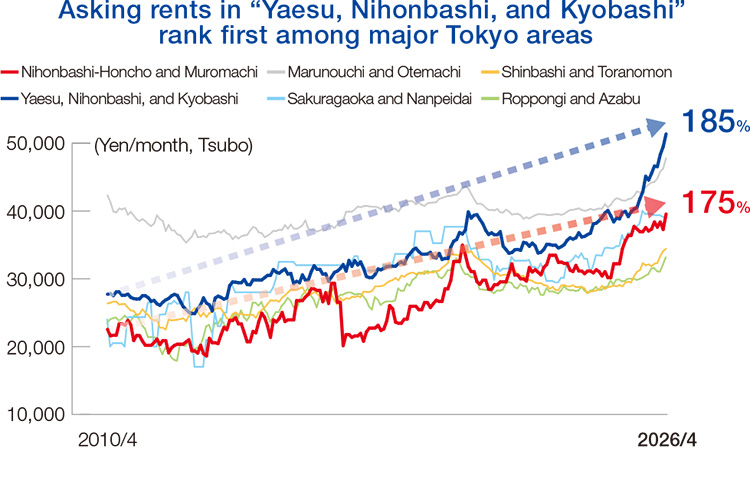
Note: Prepared based on data from Sanko Estate Co., Ltd. Asking rent including common service
fees for large buildings of at least 200 tsubo per floor. (1 tsubo is equivalent to approx. 3.3m²
-
Changes in Asking Rents in Major Tokyo Areas
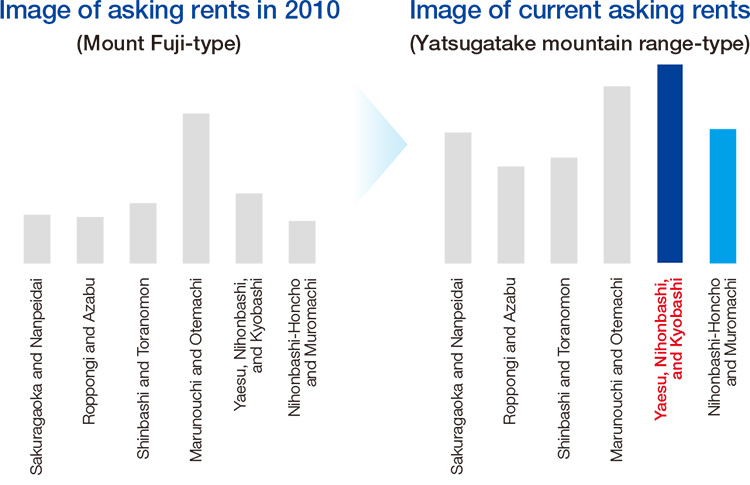
Note: Prepared based on data from Sanko Estate Co., Ltd. Asking rent including common service
fees for large buildings of at least 200 tsubo per floor. (1 tsubo is equivalent to approx. 3.3m²)
One example that is typical of the Group’s efforts to increase rents is the Yaesu 2-Chome Central District Project currently under development. Here, we concluded a lease agreement at the exceptionally high monthly rent of ¥100,000 per tsubo. Building on this success, we will accelerate efforts aimed at securing a national average double-digit increase in rent, with rents projected to rise by several tens of percent especially for properties in central Tokyo, which are extremely scarce. We will also, as a general rule, incorporate CPI-linked clauses, an approach through which we lead the industry.
This is not simply the result of favorable market conditions. I believe it is a reflection of the high esteem in which we are held and a measure of our efforts to enhance the value of office buildings, efforts that embody our ability to create neighborhoods fostered over many years, our success in proposing services that help address a host of business issues, and our management capabilities, which include business continuity planning (BCP). We will continue to lead the market with determination and steadily strengthen our earnings power by shifting toward contract structures suited to an inflationary era.
The same can be said of retail facilities.
(1) Mitsui Shopping Park, which boasts a membership of 14.5 million, more than 10% of Japan’s total population, has seen an upswing in per capita sales owing to the high average household income of its members, which exceeds the national average, successive wage hikes, and a burgeoning stock market. (2) As I will elaborate later, we have also witnessed annual overall facility net sales growth, which largely reflects synergies with our sports and entertainment activities, which are in turn the result of successful efforts to capture prevailing needs, namely spending on experiences and events, while also benefiting from the increase in visitors. An increase in facility sales translates to higher rents and subsequent profit growth. While the effects of increased revenue from office building operations take some time to accrue, the benefits from increased sales at retail facilities are almost immediate, taking effect in the same year. Looking ahead, we will continue to boost facility sales by drawing on our robust customer base. In specific terms, we will create places that attract visitors, host events that link closely with our sports and entertainment business, including collaboration with our arena business, and engage in negotiations with a view to lifting rents and common service fees, thereby expanding leasing revenue from retail facilities.
I believe that the essence of the real estate business lies in rent growth. Having said this, however, an increase in rent does more than simply boost leasing income. Higher rents also help improve asset values as well as future capital gains on sale. In fiscal 2026, we plan to post income from the turnover of assets of ¥145 billion from various sources, including operating income from Property Sales to Investors and gain on sale of fixed assets. While contracts have been signed for more than 50% of this amount, we will continue to accelerate the turnover of assets from this fiscal year and beyond while maximizing added value through such measures as rent increases.
The second growth driver:
The ability to expand revenues generated by new asset classes
Mitsui Fudosan places particular emphasis on two asset classes. The first is the arena business.
Owing to such factors as the increased free time attributable to productivity gains that stem from widespread AI use, and an expanding leisure market underpinned by the aging population, I believe that demand for meaningful experiences and connections with others will grow more than ever before. Under these circumstances, I expect arenas, which provide entertainment in an actual setting, will serve as the urban infrastructure necessary to further increase value by delivering experiences and providing people with a reason to gather. In light of the aforementioned and Our Philosophy—& PEOPLE With people, sharing the inspiration—I am convinced that this is an asset class that the Group should actively pursue.
More than anything, sports- and entertainment-related needs are expected to expand at an increasingly fast pace. Given the current lack of arenas that can accommodate this upswing in needs, I am convinced there is substantial room for growth. Against this backdrop, Mitsui Fudosan is working diligently to build a lineup of facilities of varying scales in the Tokyo metropolitan area capable of accommodating audiences of 50,000, 20,000, and 10,000 people, including Tokyo Dome, Chichibunomiya, and LaLa arena TOKYO-BAY, respectively. In addition to an arena in Nagoya, currently under construction, plans are in place to pursue a mixed-use development project on the site of Kubota Corporation’s former headquarters in Namba. With the (tentatively named) Kubota LaLa arena, a multipurpose venue with a capacity of approximately 12,500, as its centerpiece, this project includes a hotel and retail facilities. These initiatives form part of our efforts to promote arena projects across the Tokyo-Osaka-Nagoya corridor, which is recognized as Japan’s lifeline.
The Development of Arenas with Varying Scales across the Tokyo-Osaka-Nagoya Corridor
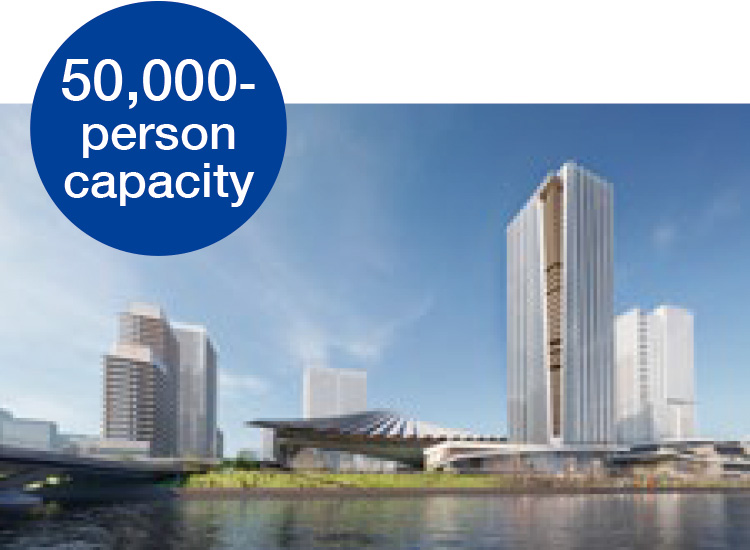
The Tsukiji District Urban Development Project
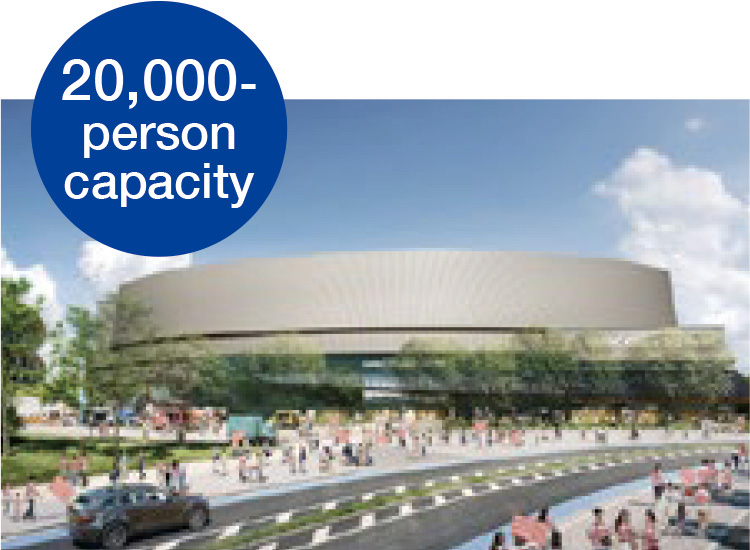
New Prince Chichibu Memorial Rugby Stadium (tentative name)
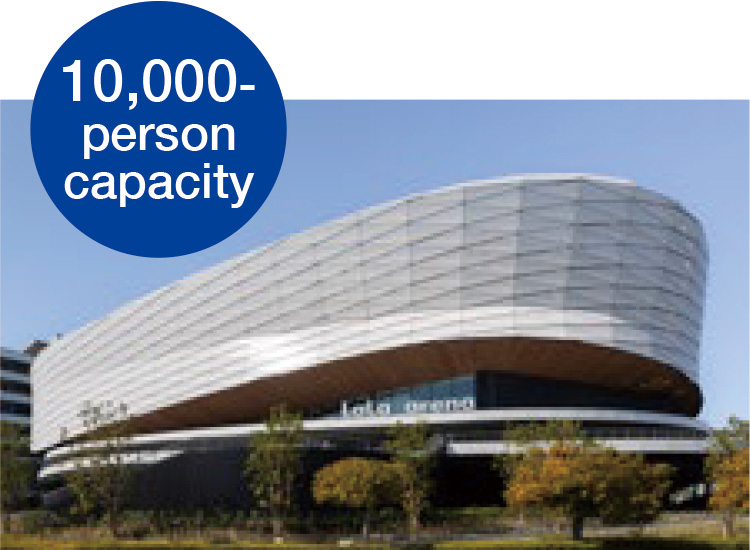
LaLa arena TOKYO-BAY
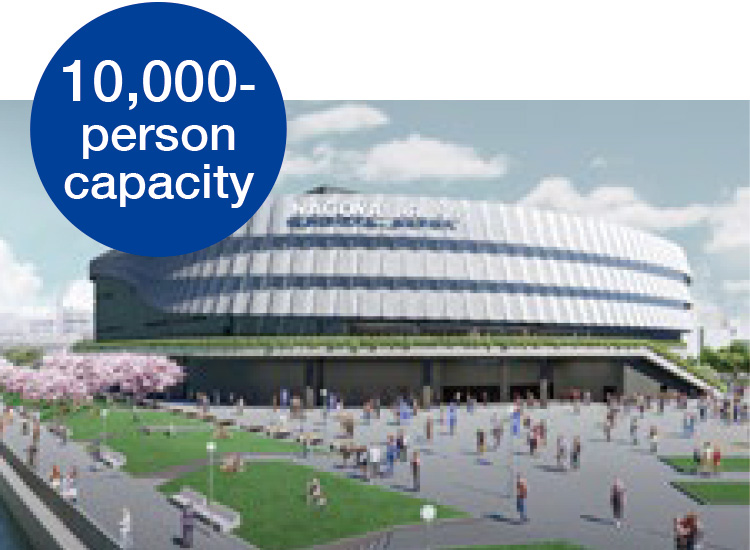
Nagoya Arena (tentative name)
Through these means, and by developing an arena portfolio and network of varying scales and across wide-ranging areas, and leveraging the unrivaled booking power of Tokyo Dome, a mecca for sports and entertainment, we are enhancing our proposal capabilities, including tour plans for the full spectrum of artists. As a network, we will secure an unassailable position in the arena business and contribute to strengthening Japan’s international competitiveness in the sports and entertainment sector.
Another key feature of these facilities is that they are located in close proximity to and integrated with the Company’s retail facilities. For example, LaLa arena TOKYO-BAY is adjacent to LaLaport TOKYO-BAY. Since the arena opened, circulation to nearby Mitsui Fudosan retail facilities has increased, and on event days the number of visitors to LaLaport TOKYO-BAY has risen to around 140% of the level on the corresponding day a year earlier, making a significant contribution to sales. Moreover, at MIYASHITA PARK in Shibuya, we operate pop-up stores in conjunction with concerts and sporting events held at Tokyo Dome. This has proven highly effective in attracting customers as well as boosting sales across the facility as a whole.
Over and above merchandise sales, we are witnessing explosive growth in the consumption of experiences and events, as embodied by the stanning phenomenon. Leveraging our strength as a Company that maintains physical shopping centers, we will promote the natural fusion of merchandise sales with the consumption of experiences and events to elevate our capabilities to the next level.
The second asset class resides in the industrial asset domain, which includes data centers, life sciences, and science parks.
It is precisely in this domain that we can help enhance Japan’s industrial competitiveness, or so-called industrial development in the Reiwa era, while at the same time ensuring the Company’s growth.
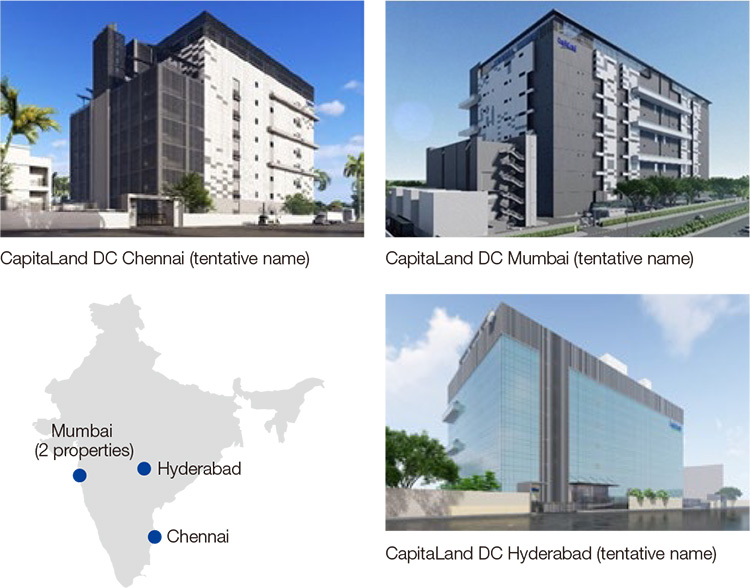
Mitsui Fudosan aims to invest a cumulative total of ¥600 billion in data centers in Japan by fiscal 2035. In addition to the business opportunity secured in Kansai in the previous fiscal year, we secured another business opportunity, further boosting our investment activities. Driven by the widespread use of AI and advances in digital technology, demand for data processing is rapidly expanding worldwide. Complementing investments in Japan, Mitsui Fudosan is expanding overseas. Working with CapitaLand Investment, a leading global real estate development and management company based in Singapore with one of Asia’s largest portfolios of assets under management and a proven track record of excellence, we decided to participate in a large-scale project in India through a joint venture. Encouraged by this approach from CapitaLand to continue exploring data center opportunities, we will work to nurture the data center business both in Japan and overseas as a pillar of growth going forward.
Participation in a Data Center Business Project in Major Indian Cities
(Total of 4 Properties)
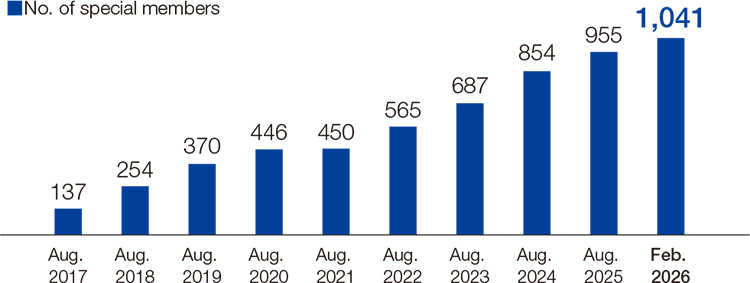
Moreover, we are expanding our business with a focus on the LINK-Lab brand, a rental lab and office building initiative that draws on the needs of the Life Science Innovation Network Japan, Inc. (LINK-J) community in the life science field. LINK-J, which I launched when serving as Chief Operating Officer of the Office Building Division in 2016, will mark its 10th anniversary in 2026. In addition to a membership that exceeded 1,000 as of the end of 2025, more than 1,250 symposia, member-organized, and other events have been held to date. LINK-J is today an extremely active and high-quality community that serves as a platform for generating innovation.
Trends in LINK-J Special Membership
In addressing the community’s need for place creation, the urban-type rental wet lab & office, LINK-Lab, launched in 2019, is well-suited for open innovation. By providing solutions to challenges associated with conventional owner-operated facilities, such as large amounts of capital investment and difficulties in securing human resources due to their suburban locations, LINK-Lab has forged a position as the urban rental research facility of choice.
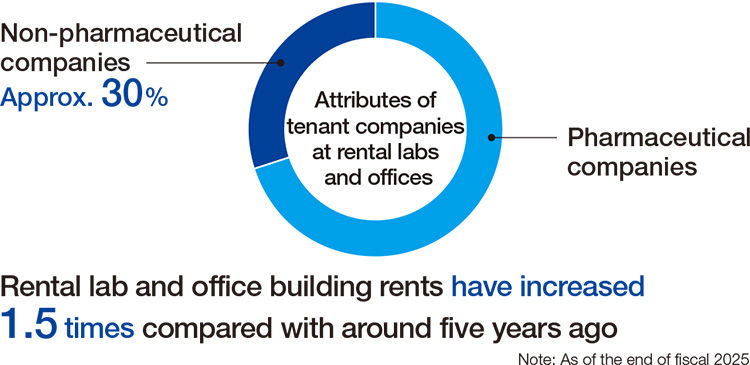
Our LINK-Lab facilities are currently in high demand not only from startups, but also from major pharmaceutical companies. Our tenant base is also expanding to include non-pharmaceutical companies in such sectors as semiconductors, food, and energy. Property leasing trends remain steady with rent levels increasing 1.5 times compared with around five years ago at the time the first property was leased. This is a clear indication of robust demand for urban-type rental labs. Recently, we have continued to expand the scale of the business by securing new business opportunities in Koto-ku, and we intend to translate this growth into a larger profit contribution.
Growing Demand for Rental Labs & Offices
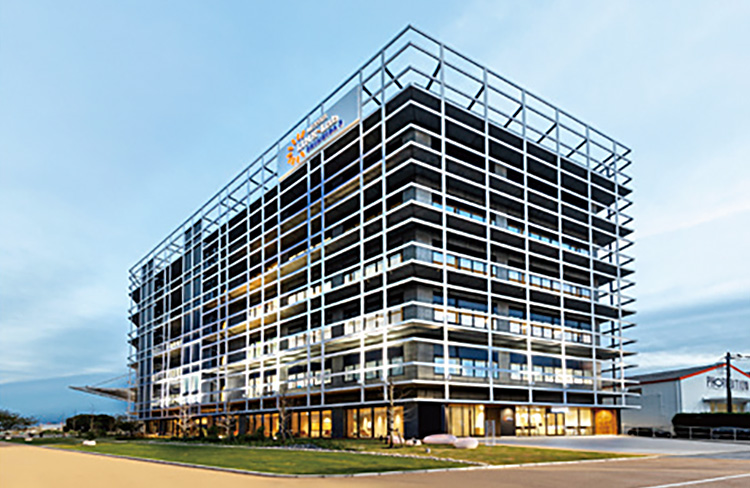
MITSUI LINK-Lab SHINKIBA 3 (Koto-ku, Tokyo)
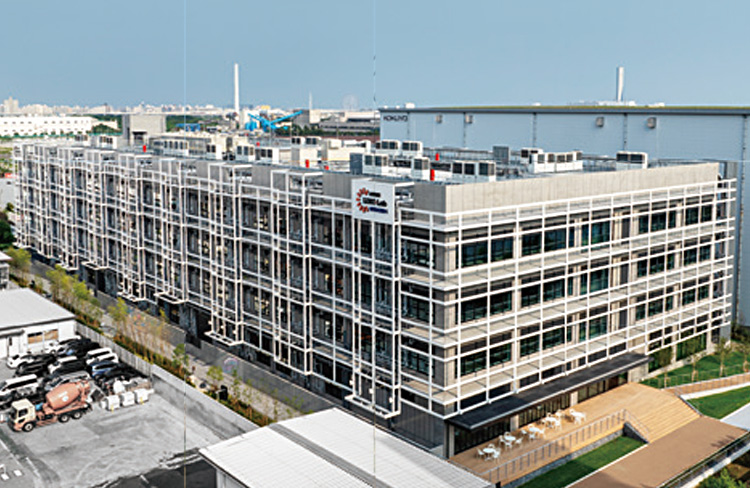
MITSUI LINK-Lab TOYOCHO 1 (Koto-ku, Tokyo)
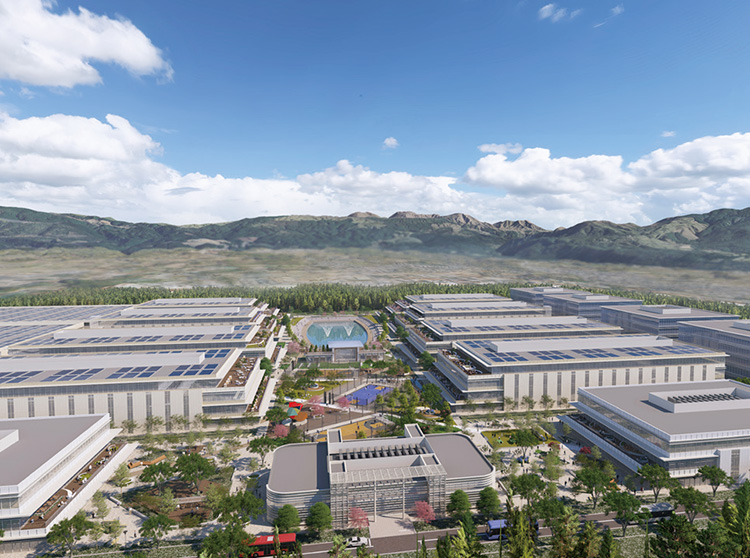
In recent years, we have initiated steps to pursue science park projects in earnest. Kumamoto Science Park, which we are developing in Kumamoto Prefecture, where a TSMC semiconductor plant is located, is a prime example. In building the infrastructure necessary to support a cluster of cutting-edge industries, including semiconductors, we are taking on the challenge of creating new value by making the most of our neighborhood creation know-how, the RISE-A semiconductor community, and an industry-government-academia network that straddles Japan and Taiwan. Real estate development capabilities alone are not enough to claim a competitive edge in the science park domain. What is required is comprehensive strengths encompassing corporate networks, relationships with government and academia, community management capabilities, and collaboration with overseas developers. I believe there are only a handful of companies that possess all of these attributes. This collective and comprehensive strength is in fact our Company’s greatest asset. Leveraging this comprehensive strength, we will continue to evolve and emerge in the Industry Developer 2.0 format (P.45), help enhance Japan’s industrial competitiveness, and grow together with stakeholders by contributing positively to reinvigorating industry.
Full-Fledged Participation in a Science Park Project
The third growth driver:
The ability to expand asset-light revenues, centered on fee businesses
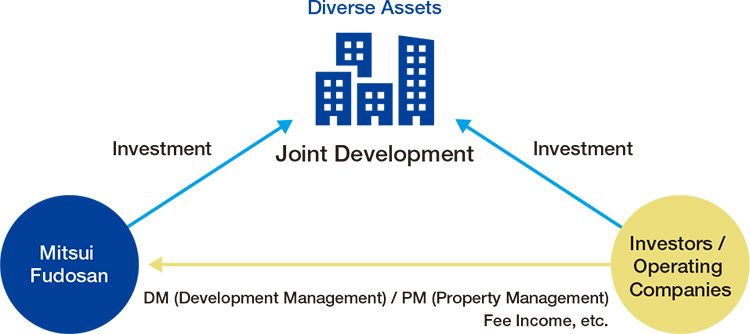
As I previously mentioned, Mitsui Fudosan’s strengths lie in “the ability to win business opportunities,” “the ability to create high value neighborhoods, facilities, and services,” and “the ability to monetize the added value we create.” Buoyed by these comprehensive strengths, we possess abundant business opportunities. Rather than pursue each of these opportunities using our own balance sheet, however, we will provide these three core strengths as services to investors for a fee. In doing so, our goal is to diversify revenue streams. I am convinced that this is an excellent business model that facilitates highly capital efficient profit growth, especially when interest rates are exhibiting an upward trend, while also allowing us to harness our unique strengths, including an extensive development track record and diverse customer relationships.
This is a concept that we have pioneered as an investor co-creation model for over 20 years. As exemplified by TOKYO MIDTOWN, a project in which I was personally involved, where we procured funds from investors, submitted and secured bids, and thereafter engaged in asset management operations, we maintain a competitive edge over our rivals. In concert with our pursuit of growth with an increased focus on efficiency, we will continue to strengthen our asset-light revenue platform by placing greater emphasis than ever before on expanding such revenue streams as development management and property management fees.
Investor Co-Creation Model Using Third-Party Capital
I believe that the essence of our growth strategy lies in not relying on a single factor for success. Our success depends on a variety of factors, including existing asset growth and new asset class expansion as well as the prosperity of our fee and overseas businesses. With multiple growth engines operating all at the same time, we are well placed to secure sustainable and stable profit growth. This is in fact the principal reason why we remain confident in our ability to achieve the targets set for fiscal 2030. Moving forward, I will spearhead efforts toward the Group’s next stage of growth by leveraging our overwhelming ability to win business opportunities and comprehensive strengths to convert opportunities into revenue.
Turning in particular to efforts aimed at achieving the Group’s ROE target, controlling shareholders’ equity is just as important as profit growth. What are your thoughts on this?
Mitsui Fudosan has identified a total payout ratio target of 50% or higher under “& INNOVATION 2030.” With this target in mind, we returned 54.9% of net income to shareholders in fiscal 2025. Meanwhile, shareholders’ equity will continue to accumulate steadily even while providing returns to shareholders for companies that secure sustained profit growth. I therefore recognize the need to not only grow profits as a means to improve ROE, but to also control shareholders’ equity as a key management issue. As I have mentioned in the past, there can be no return without growth. Accordingly, our top priority is to increase both EPS and the dividend amount and to consistently boost returns per share by continuing to grow profits. In addition, we will step up efforts to control shareholders’ equity going forward in a bid to achieve our ROE target.
Initiatives Aimed at Improving ROE
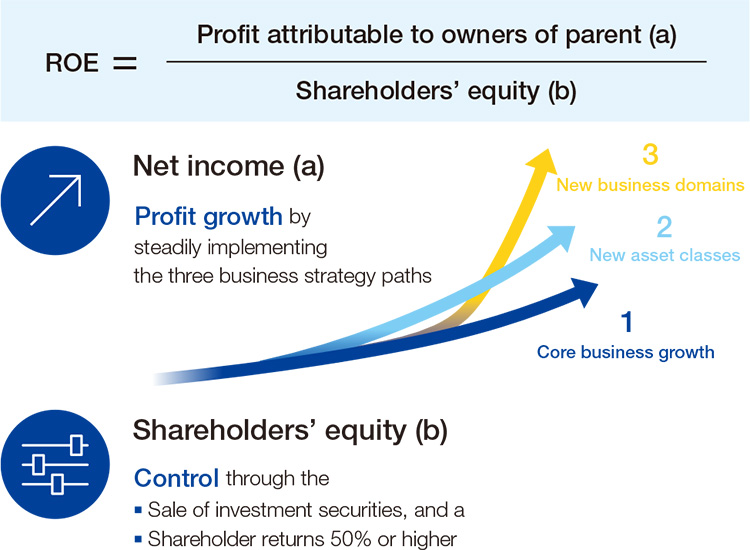
the three business strategy paths (P.41-44)
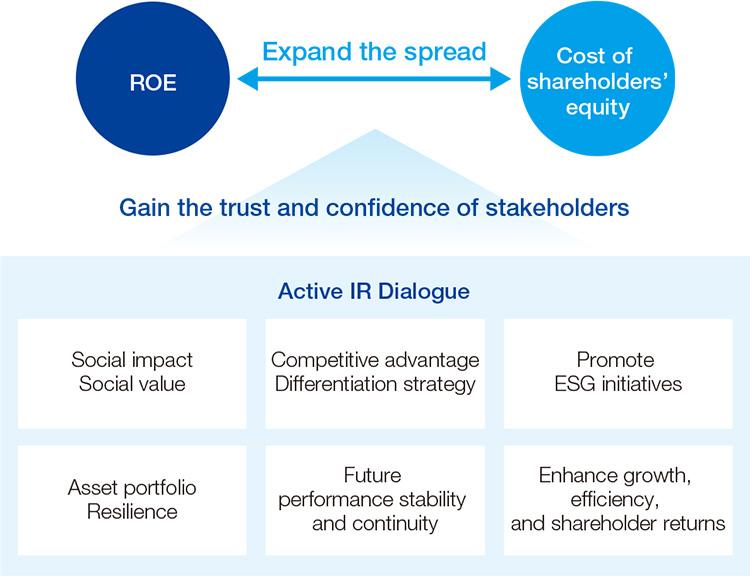
Moreover, I recognize that widening the equity spread between ROE and the cost of shareholders’ equity is of equal importance to lifting the absolute value of ROE. Only by stably generating returns that exceed the cost of shareholders’ equity can we sustainably enhance corporate value.
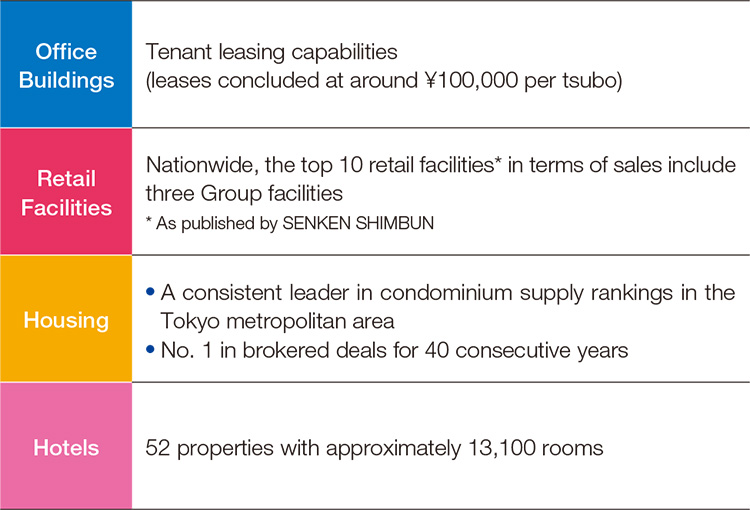
To this end, we must first secure a high level of profitability while maintaining robust resilience through business strategies that distinguish us from competitors. Mitsui Fudosan boasts top-tier competitiveness across a wide range of sectors, including office buildings, retail facilities, housing, hotels, and logistics facilities as well as in its overseas business, and continues to build a balanced business portfolio. We generate substantial profits during periods of expansion and address issues through other businesses during adverse times. This abundant and robust business platform is a unique and defining feature of the Company and underpins our sustainable profit growth.
High Competitiveness in Our Businesses
Second, we must enhance the effectiveness of governance.
Mitsui Fudosan’s Board of Directors is comprised of internal directors with a deep understanding of the real estate business and outside directors with diverse insights and experience. As such, I am confident that discussions are conducted in a lively manner with a focus on both defensive and offensive governance, an approach that is highly regarded by outside directors (P.17). I also believe that this constructive deliberation helps to improve the quality of management, which in turn helps enhance corporate value.
Third, we must upgrade and expand dialogue with investors.
In recent years, I believe our disclosures have received increasingly positive recognition, but I do not consider them sufficient yet. I believe we should look more intensely at deepening investors’ understanding of our corporate value by communicating our strengths, growth strategies, and capital policies in an easier-to-understand and more detailed manner. In doing so, I am confident that we can maintain a low cost of capital even in an environment of rising interest rates.
In addition to improving ROE through profit growth, we will work to properly control shareholders’ equity. Moreover, we will enhance the strength of our business portfolio and effectiveness of governance while upgrading and expanding dialogue with capital markets. By steadfastly implementing these measures, we will widen the equity spread both through improvements in ROE and a reduction in the cost of shareholders’ equity. This will allow us to further enhance our corporate value.
Enhancing Corporate Value through Dialogue with Capital Markets
In conclusion, what are your aspirations toward further enhancing corporate value?
The world is currently at a major turning point. The environment surrounding us is changing on an unprecedented scale amid heightened geopolitical risks, restructuring of supply chains, ongoing inflation, changes in the interest rate environment, and shifts in demographics and industrial structure. Given these circumstances, it is easy to focus solely on the uncertainties. Quite the contrary, for the very reason that we are experiencing dramatic change, I believe that opportunities to create new value are on the rise. To date, the Mitsui Fudosan Group has grown by confronting head on and resolving the social issues of each era. We have helped enrich people’s lives through the creation of neighborhoods, contributed to Japan’s economic development by building an industrial platform, and provided places that nurture new communities and innovation.
Today, we stand at the threshold of a new stage of growth. Mitsui Fudosan has an unrivaled ability to capture business opportunities that surpasses that of our competitors. We also provide high-value-added real estate and services whose value is increasingly being properly recognized in rents and other forms of pricing in an inflationary environment. At the same time, we enjoy trust-based relationships with customers and tenant companies nurtured over many years, leasing capabilities that leverage extensive networks in Japan and overseas, and management know-how across a diverse range of assets. Building on this foundation, we have the ability to monetize this multifaceted added value. More than anything else, we boast insights and experience that stem from successful efforts to overcome a host of challenges.
By fully leveraging these sources of competitive advantage, I am confident that even amid heightened uncertainty we can secure high-quality returns that more than offset rising costs. I am equally convinced that we can sustain our profit growth into the future and continue to forge an overwhelmingly dominant position.
Our efforts to take on the challenge posed by the industrial asset domain, beginning with data centers, the life science field, and science parks, extend beyond expanding business opportunities. These efforts are designed to balance social value through contributions to the enhancement of Japan’s industrial competitiveness and the creation of innovation with economic value in the form of the Group’s sustainable growth. I believe that enhancing corporate value cannot be achieved solely through the pursuit of economic value. It is vital that we remain a company that is indispensable to society. With this in mind, it is imperative that we continue to help solve social issues. In doing so, we will secure profit growth and expand returns to shareholders. Our ability to sustain this virtuous cycle over the long term is what will truly lead to the enhancement of our corporate value.
In that sense, the respective EPS growth rate CAGR and ROE targets of over 8% per year and 10% or higher identified under “& INNOVATION 2030” are merely stepping stones. Our true vision is to evolve into a company that creates sustainable value that goes beyond numerical targets. As I have commented on numerous occasions before, enhancing both corporate and shareholder value is my most important mission as CEO. Mitsui Fudosan has a wealth of business opportunities. We also maintain the competitive edge necessary to convert these opportunities into sustainable profit growth. I am confident that we will secure profit growth, improve capital efficiency, and expand shareholder returns at an even higher level by making the most of our inherent strengths. Moving forward, we will continue to generate new value by creating both social and economic value while at the same time transforming the changes of each era into opportunities for growth. Through these means, we will work to remain a company that unfailingly meets the expectations of all stakeholders, including shareholders.
To reiterate, enhancing corporate value is my paramount mission. Achieving “& INNOVATION 2030” is not our end goal. Beyond that, we will pool the Group’s collective strengths to create new value for society, thereby ensuring that our value creation journey continues as does our pursuit of enhanced corporate value.
I hope you will continue to look forward to what lies ahead for the Mitsui Fudosan Group.