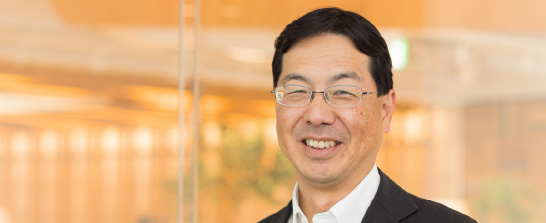
Originally announced in 2024, the Group long-term vision “& INNOVATION 2030” has completed its second year.
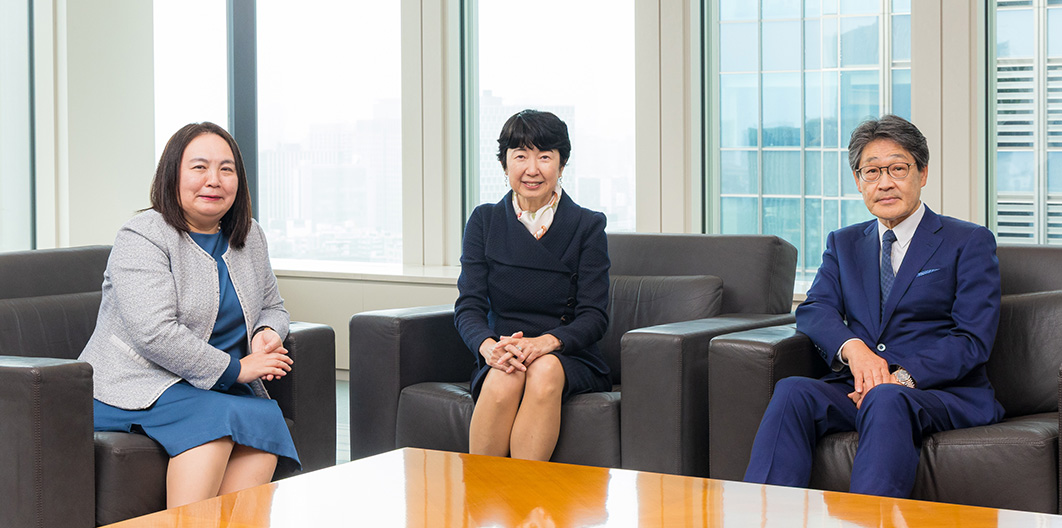
On this occasion, we held a roundtable discussion with three outside directors, Eriko Kawai, Mami Indo, and Yo Honma, covering such topics as progress in and outstanding issues with the long-term vision, dialogue with capital markets, and the effectiveness of the Board of Directors. Details are presented as follows.
On Completing the Second Year of the Group Long-Term Vision
Honma: Even from the perspective of someone serving their first year as director, I recognize that Mitsui Fudosan performed superbly in fiscal 2025. The Company achieved record high revenues and profits in every segment, and reached new heights for business income, ordinary income, and profit, all of which are remarkable achievements. Although this is something that also showed up in its performance, what really encouraged me was that the Group made steady headway with quality growth through the promotion of businesses that stayed true to its ideals. As represented by neighborhood creation in Nihonbashi, I feel the Group has continued to refine the value it delivers by fully pursuing office buildings where people want to work in cities people want to visit. This move has allowed it to successfully decouple from the market and distinguish itself. Although the Group has already spent some time on diversifying its revenue sources, a key point in this effort is the fact that its facility operations business, which includes the sports and entertainment business, has increasingly established itself as a fourth source of revenue alongside the leasing, property sales, and management businesses. I am therefore strongly encouraged by the Group’s steady progress in enhancing its unique corporate value and in strengthening its brand power.
Kawai: I agree. During the second year of the Group’s long-term vision, Mitsui Fudosan achieved a good balance of growth in each segment along with greater revenue, which makes me, as an outside director, focus on my monitoring role with peace of mind. Despite now facing an evolving business climate that involves higher interest rates along with soaring construction and labor costs, the Group extended its top-line and revised plans as a means of driving business forward while securing profitability through methods that stayed true to its ideals, for example by improving business profitability. As Mr. Honma mentioned, I also see this in a positive light as evidence that the Group has developed comprehensive capabilities through the creation of neighborhoods that people want to visit. In addition, from the perspective of governance, the Group did a better job of clarifying its approach to the executive compensation system and the calculation formula in 2025, thereby enhancing the transparency of its explanations regarding the relationship between executive compensation and governance and improved capital efficiency, not just performance. I feel that this move further strengthened trust
among the capital markets. On the other hand, the weakening yen has expanded the balance sheet and interest-bearing debt, indicating to me that the Group must continue its efforts to diligently control these aspects of its business. This is a development that I intend to monitor closely.
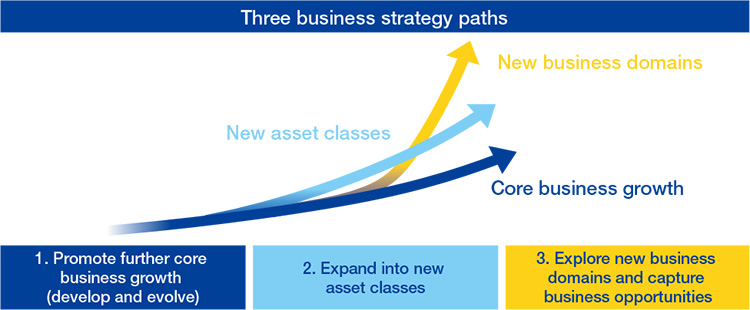
Indo: In fact, the Group was in the process of formulating its long-term vision just about the time of my appointment. Although the vision already included the concept of the “Three Paths” by this point, whereas the first of these paths (Core business growth) had a clear outlook, I honestly felt that the second path (New asset classes) and the third path (New business domains) were areas that would require a significant amount of effort. Now that the second year of the vision has come to an end, however, the second path now has better defined contours for the new asset class business model, as well as clearer contours for the sports and entertainment business. It also seems to me there is now greater clarity for the direction of domains for which future growth can be expected, like science-focused Lab & Office development and data centers. Similarly, in regard to the third path, the Group has supported the formation of communities in various industries through LINK-J, cross U, and RISE-A, where the Group has built relationships of trust with those who have participated in these programs. I think the Group’s participation in the Kumamoto Science Park program is also a good example of this. Throughout the second year, the Group performed strongly enough to achieve its numerical targets ahead of schedule and steadily built a track record in the direction it had set out to pursue. Looking back over the past two years, I believe these quality results were very important. As Ms. Kawai just mentioned, both the Company’s profit and loss and balance sheet have undergone structural changes over the years due to the expansion of the overseas business and a weakening yen, so it is my opinion that a future key issue is building a more robust management platform in light of these changes in the financial structure.
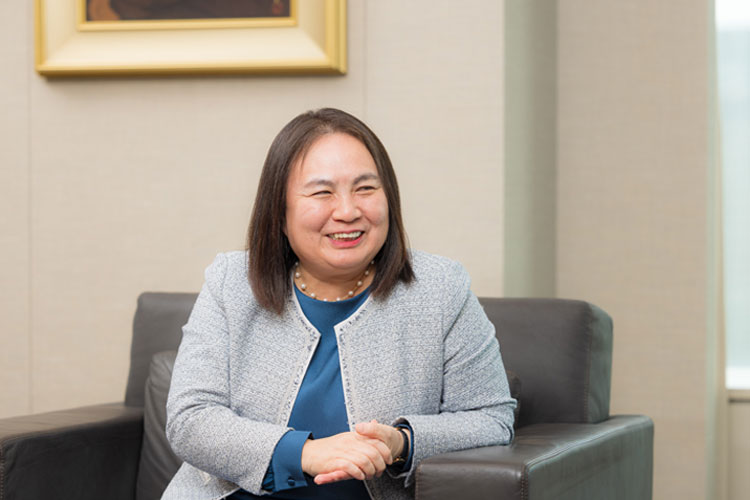
Outside Director Mami Indo
Having worked as an analyst and in consulting services at Daiwa Securities Co. Ltd. and Daiwa Institute of Research Ltd. and as a member of the Securities and Exchange Surveillance Commission, Ms. Indo has a wealth of experience and broad insight. Appointed as a director of the Company in June 2023, she is a member of the Nomination Advisory Committee and Compensation Advisory Committee.
Expectations and Outstanding Issues for the Third Year of the Group Long-Term Vision
Honma: When it comes to management, thoroughly following through on the decisions that have been made is important. As the third year of the long-term vision, I expect fiscal 2026 to be a time in which the Group appropriately reflects within pricing the unique added value and brand that it refined through the first path. In addition, it must create new businesses that combine each of these three paths in a way that consistently monetizes outcomes. As far as the third path is concerned, I am highly supportive of the Group’s unique initiatives to establish ecosystems as an industry developer. Similarly, now that its flagship New York properties in the United States have entered stable operations as part of the overseas business, thereby establishing a rock-solid revenue foundation, I expect the Group to transition into the profit growth phase by accelerating asset turnover while maintaining relationships built on trust with its local partners.
Kawai: The overseas business has expanded to the point where assets located outside Japan now account for 30% of the Group’s total, and I hope to see this business further evolve into a presence that underpins profit growth Group-wide. I would also like to see the Group circulate the advanced knowledge and business models it has acquired overseas back to Japan, and elevate these into new business models that are unique to the Group. On the other hand, looking at macro developments in the external environment, the Group faces significant uncertainty under today’s inflationary environment, exemplified by rising interest rates along with soaring construction and labor costs. By steadily advancing its existing initiatives, however, I still believe the Group can achieve its quantitative targets for around 2030, namely an EPS growth rate of 8% or higher per year (CAGR) and an ROE of 10% or higher. Yet I want to see the Group expand the fee business by among other measures leveraging third-party capital to help control interest-bearing debt, steering the Group toward more efficient profit growth.
Indo: As you just mentioned, Ms. Kawai, uncertainty in the macro environment might just make fiscal 2026 the most challenging year of the Group’s long-term vision. Precisely because the Group achieved its quantitative targets ahead of time in the second year, during the third year management must guide the Group in a way that anticipates the future. For example, as part of the rotating asset strategy that has driven results to date, the Group must make intelligent judgements, based on interest rates and the inflationary environment, as to whether it should move at the same pace or if it should vary that pace in light of prevailing circumstances. I therefore intend to more deeply debate the structure of the business portfolio, along with the timeframe for investment recovery and capital allocation, in a way that helps the Group achieve future growth while adapting flexibly to changes in the external environment.
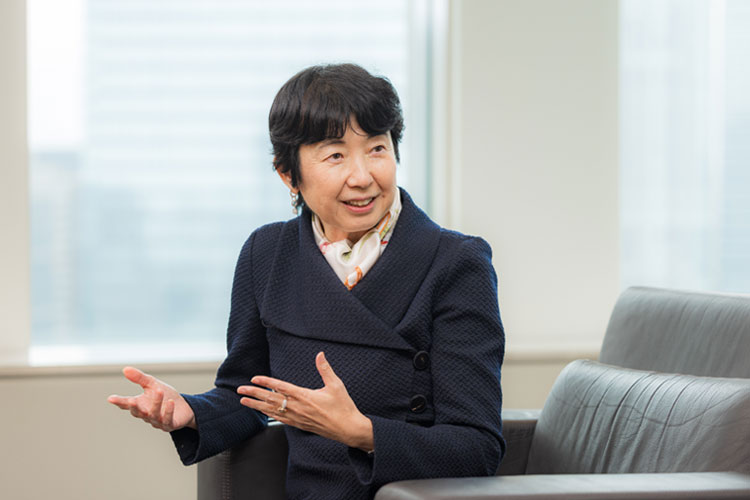
Outside Director Eriko Kawai
Ms. Kawai serves as Professor Emeritus of Kyoto University. Active overseas for many years, and with a wealth of experience as a management consultant at various international organizations, including the Bank for International Settlements (BIS) and the Organization for Economic Cooperation and Development (OECD), Ms. Kawai was appointed a director of Mitsui Fudosan in June 2021. She also serves as a member on the Company’s Nomination Advisory Committee and Compensation Advisory Committee.
Share Price Awareness and Communication with Capital Markets
Kawai: Equities markets tend to focus on short-term, visible numbers and consensus for the coming fiscal year, which indicates to me that share prices are partially determined from the perspective of whether performance exceeds near-term forecasts. Yet the true value of the Group lies in its long-term urban development capabilities that are difficult to measure using figures for the year ahead alone, as with its neighborhood creation projects in the Tsukiji District and its riverfront redevelopment projects in Nihonbashi. I would therefore like to see the Group’s businesses seek to acquire a positive reputation on the equities markets regarding their projects and business value along this longer timeframe by communicating through detailed explanations that indicate these will generate value over time. Moreover, effective net asset value (NAV), which is based on unrealized gains including real estate for sale and the abundance of the development pipeline, will emerge as a factor that shores up the Group when the share price hits a downward trend. Which is why I believe that thoroughly explaining the value of assets held by the Group along with their future growth potential is essential to supporting the Group during the downsides of unavoidable sector cycles on equities markets.
Indo: As with Ms. Kawai, I also believe it is extremely important for share price evaluations to consider the timespans over which companies conduct business. One feature of the real estate business is the long duration of its projects. Which is why I feel there are limits to judging the propriety of how the Group’s management is steered based solely on short-term share price trends. Meanwhile, the Group must carefully analyze the factors behind any gaps between corporate value as seen by the Company and market capitalization. In other words, instead of implementing short-term share price measures, the Group should engage in the process of searching out underlying factors and communicating a message to capital markets from a long-term standpoint in order to deepen their understanding.
Honma: Judging from the Group’s capabilities and growth potential, I feel that the current share price still leaves much room for growth. In order to drive the share price up, however, the Group must increase the number of individual shareholders and expand the Company’s fan base. The Group possesses retail facilities, hotels, arenas, Tokyo Dome, and other powerful contact points that allow everyday people to experience its brand. Yet I do not feel it has fully connected that strength and appeal to a broader shareholder base. The key here is conveying to individual investors difficult things in simple terms, simple concepts deeply, and deep ideas in an interesting manner. Moreover, instead of simply explaining the “Three Paths” to institutional investors, the Group must work to communicate this concept as a story of growth in an easy-to-understand manner. For example, I believe that approaching a more appropriate share price will require the Group to translate and deliver its efforts to coexist with the environment, which it has communicated as & EARTH for Nature, in a way that goes beyond their economic value. Specifically, this message should include the kinds of social value that these efforts generate in the form of a story of growth that integrates the resulting economic and social value. (P.66)
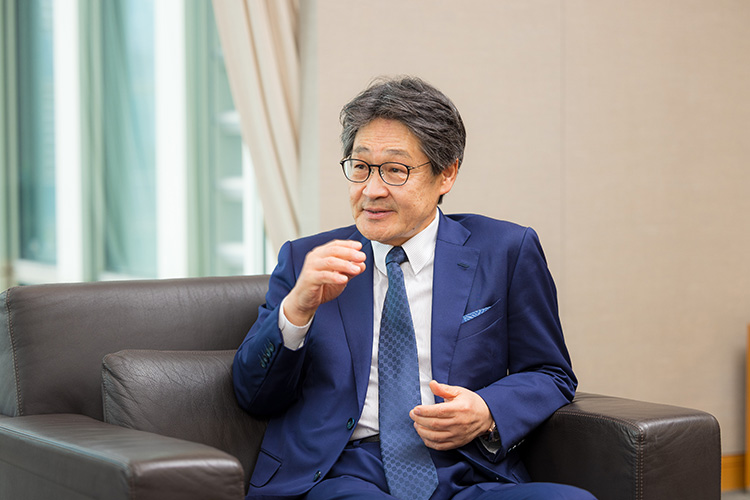
Outside Director Yo Honma
Mr. Honma serves as Chief Corporate Advisor at NTT DATA Group Corporation. He possesses extensive knowledge and experience in IT, digital technology, and other information communications fields, and has a wide range of expertise in overall management. He was appointed a director of Mitsui Fudosan in June 2025. He also serves as a member of the Nomination Advisory Committee and Compensation Advisory Committee.
Effectiveness of the Board of Directors
Honma: I feel that the command exercised by the chairperson of the Group’s Board of Directors has been spot-on in terms of its operations. Similarly, I give the Board’s approach to discussions high marks in regard to their depth under a healthy air of tension, for example, in how the executive side, with its extremely detailed understanding of businesses and markets, and the outside directors, with their respective areas of expertise, exchange views and questions in a lively manner. In addition, at meetings of the Board of Directors, the Company conducts progress reports regarding the execution of duties, under which each division provides a detailed report once a year on the status of its business, key issues, and responses. While serving as a valuable opportunity for us as outside directors
to better understand the frontlines, I feel these reports also serve as an excellent opportunity for those on the frontlines to organize and debate the issues faced by their own divisions. That this effort goes beyond simple reporting to function as a system of PDCA cycles is remarkable. (P.75)
Kawai: Because we receive detailed explanations from the secretariat in advance of the Board of Directors meetings, this helps us deepen our understanding of the agenda items on the date of the meetings and creates an environment in which it is easy to candidly express our views. The secretariat also shares the details of discussions held at Executive Management Committee meetings. This allows us to grasp the problems as sensed by the executive side, thereby bringing clarity to the issues up for debate during discussions by the Board of Directors, leading to more effective discussions. Moreover, in the survey conducted each year to evaluate the effectiveness of the Board of Directors, I feel that the secretariat carefully organizes and analyzes feedback and suggestions for improvement from outside officers and continuously applies them to improve the Board’s operations. (P.75)
Indo: Now that Mitsui Fudosan shares details of Executive Management Committee meetings, we are better able to focus on the actual matters we should discuss during meetings of the Board. I think this initiative has helped enhance the quality of debate by the Board of Directors. Moreover, the opportunities we get to tour local sites in Japan and abroad are also highly meaningful. During the tour of Taiwan last year, we had the chance to converse directly with those on the frontlines, and were able to directly experience the business models, strategies, and frontline issues that we could never have fully understood from documents alone. Speaking face-to-face with those on the frontlines offers important opportunities for the outside directors, so I hope to see these continue in the future. (P.75)
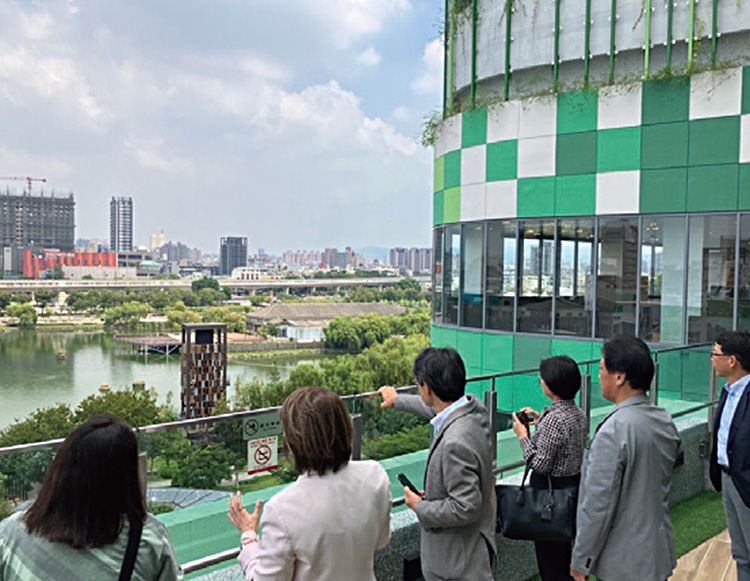
Tour of LaLaport TAICHUNG in Taiwan
Aspirations for the Third Year of the Group’s Long-Term Vision
Indo: I see it as my role to support healthy risk taking by management. In order to realize the corporate message, “Transforming the city Transforming the future,” the Group must incorporate AI and other technologies into neighborhood creation and support next-generation innovation as an industry developer. Meanwhile, we have even seen some companies with long histories lose significant corporate value following the incidence of a single scandal. Which is why protecting the trust earned from stakeholders is another core duty held by the outside directors. Under the twin perspectives of offense in support of growth and defense to prevent damage to corporate value, I intend to help the Group sustainably increase value into the future.
Honma: I intend to help drive up corporate value by handling defensive as well as offensive governance in a well-balanced manner. From a defensive perspective, I will firmly monitor interest-bearing debt, the interest burden, and geopolitical risks, while from an offensive perspective, I hope to support management in taking on challenges so that it does not miss business opportunities as the Group turns toward the second half of its long-term vision.
Kawai: I believe that the outside directors are required to take the perspectives of shareholders, society as a whole, and future generations. The urban development projects in which the Group is involved include those that transform the very cities themselves over long periods of time, like the neighborhood creation projects in the Tsukiji District and the riverfront redevelopment projects in Nihonbashi. Although it is important for us to consider these projects with the same depth of understanding regarding the issues as the management team, at the same time we must consider the value these projects offer in a way that goes beyond today’s generations to include the people and communities who will use these neighborhoods in the future. This means another one of our roles is to speak candidly whenever we feel something is off, without ever sacrificing our objective perspectives as outside directors. By bringing a long-term timeframe and social perspective to discussions, I will do everything in my power to ensure the Group can build a better future.